
Double Bass Transport in Singapore: What Students and Parents Should Know
- Dec 9, 2019
- 5 min read
Updated: 15 hours ago
* Updated 24 Jun 2026
One practical concern that many double bass students eventually face is transport.
Unlike smaller string instruments, the double bass is not something that can be carried around easily on public transport or placed casually into any vehicle. Whether a student is travelling for lessons, rehearsals, auditions, school orchestra activities, or performances, it is important to plan the journey properly so that the instrument, the player, and the people around them are kept safe.
This article outlines some common double bass transport options in Singapore, based on my own experience moving the instrument around for teaching, rehearsals, and performances.
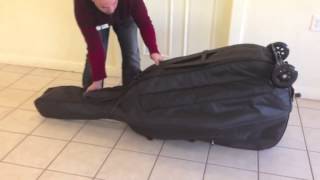
The video above shows one possible way of loading a double bass into a sedan or hatchback. With the front passenger seat reclined, the bass can usually be positioned safely while still allowing one passenger to sit at the back, depending on the car model and the size of the instrument.
If You Have Access to a Car
Having access to a car is usually the most straightforward option.
For many students and families, the double bass can fit into a sedan or hatchback if the seats are adjusted correctly. However, this depends on several factors:
the size of the double bass
the shape of the car interior
whether the front or back passenger seats can recline fully
whether there are other passengers travelling together
how comfortable the player is with loading and unloading the instrument
It is worth trying the loading method carefully before the actual day of a lesson, rehearsal, or performance. This avoids unnecessary stress when time is tight.
Parents should also take note that a double bass may look more manageable once it is inside the car, but the more difficult part is often the loading and unloading. The instrument is large, awkward, and fragile, especially around the bridge, scroll, neck, and endpin area.
Public Transport
If you do not have access to your own vehicle, public transport may seem like the next option. In practice, this can be quite challenging.
Bus

For short-distance travel, it may be possible to take a wheelchair-accessible bus during off-peak hours.
In this situation, the double bass is usually brought in from the rear door, and the player may need to occupy the wheelchair area if it is available. However, this should be done with consideration for other passengers, especially wheelchair users, elderly passengers, parents with strollers, and commuters who may need the space more urgently.
For this reason, I would only consider this for short trips, during quieter periods, and only when the bus is not crowded.
MRT
Bringing a double bass onto the MRT is possible in theory, but it is not always practical.
Some players have attempted it and received a mix of surprise, concern, or disapproval from other passengers. This is understandable because the instrument takes up a lot of space, especially during crowded periods.
If there is no other choice, it is better to attempt this only during off-peak hours. Even then, station staff may still stop the player if they feel that the instrument creates a safety or space issue.
Because of this, MRT transport should be treated as a last resort rather than the default option.
Taxi or Private Hire
For most double bass players in Singapore, taxi or private hire transport is usually the most realistic option.
It is still not always perfect. Some drivers may be unfamiliar with transporting a double bass, and some may be hesitant once they see the size of the instrument. To reduce uncertainty, I usually prefer booking through an app rather than flagging a taxi from the street.
If there is a comments section in the booking app, it can help to indicate something simple such as:
“Musical instrument transport”
“Large string instrument”
“Double bass”
This gives the driver some context before arrival.
Sedan Taxi

This is one of the transport methods I commonly use. I usually bring the bass around with a Bass Buggie, which makes short-distance movement much easier.

Following the loading method shown earlier, the bass can usually fit into a sedan taxi, with the player seated directly behind the driver.
This method works reasonably well, but it still depends on the taxi model, seat angle, and how much space is available. It is also important to load the bass carefully so that the bridge, neck, and scroll are not under pressure.
7-Seater Maxi-Cab
A 7-seater maxi-cab is usually the most comfortable option for double bass transport.
With the rear seats and middle row adjusted properly, the bass can usually be placed more easily, and there may still be room for several passengers. This is especially helpful when travelling for performances, school events, or situations where the player needs to carry additional items.
The main drawback is cost. Maxi-cabs are usually more expensive than regular taxis, especially for advance bookings or longer trips.
For important events, however, the higher cost may be worth considering. A more suitable vehicle can reduce stress, avoid last-minute transport problems, and make the journey safer for both the player and the instrument.
Hatchback Taxi
Hatchback taxis, such as the Toyota Prius or Hyundai Ioniq, can be a very useful option because they often allow the bass to load more easily through the rear.
This can be less physically straining than trying to angle the bass through the side door of a sedan. However, the main limitation is passenger space. In most cases, this setup usually allows only the driver and one passenger in front.
Booking through the CDG Zig app may give a higher chance of getting a suitable taxi model, although this is never fully guaranteed.

How the bass fits in a Prius

The bass usually needs to be placed at an angle to fit properly.
Plan Ahead for Important Events
If the student is travelling for an important rehearsal, audition, competition, school performance, or concert, it is best to plan transport earlier rather than leaving it to chance.
A few things to consider:
allow more time than usual
check traffic conditions
factor in peak-hour surcharges, ERP charges, and possible waiting time
consider whether a flat-fee booking may be more predictable
avoid experimenting with a new transport method on the actual day
There have been occasions where a regular taxi ride ended up costing much more than expected because of advance booking fees, peak-hour charges, ERP, and traffic delays. In some cases, a maxi-cab flat fee might have been the more sensible option from the beginning.
For important events, the goal is not just to find the cheapest option. The goal is to arrive safely, calmly, and with the instrument in good condition.
Final Thoughts
Transport is one of the less glamorous but very real parts of learning the double bass.
For beginners and parents, it is worth understanding this early. The double bass is a large instrument, and regular travel requires some planning. Having a suitable transport arrangement can make lessons, rehearsals, and performances much less stressful.
Whenever possible, test the transport method before an important day. If the journey involves a school event, audition, or performance, give yourself more buffer time than you think you need.
A well-planned journey makes the learning experience smoother — for the student, the family, the teacher, and the instrument.




Comments